
What does the Pentagon know that we don’t?
Something in the news caught my attention this week.
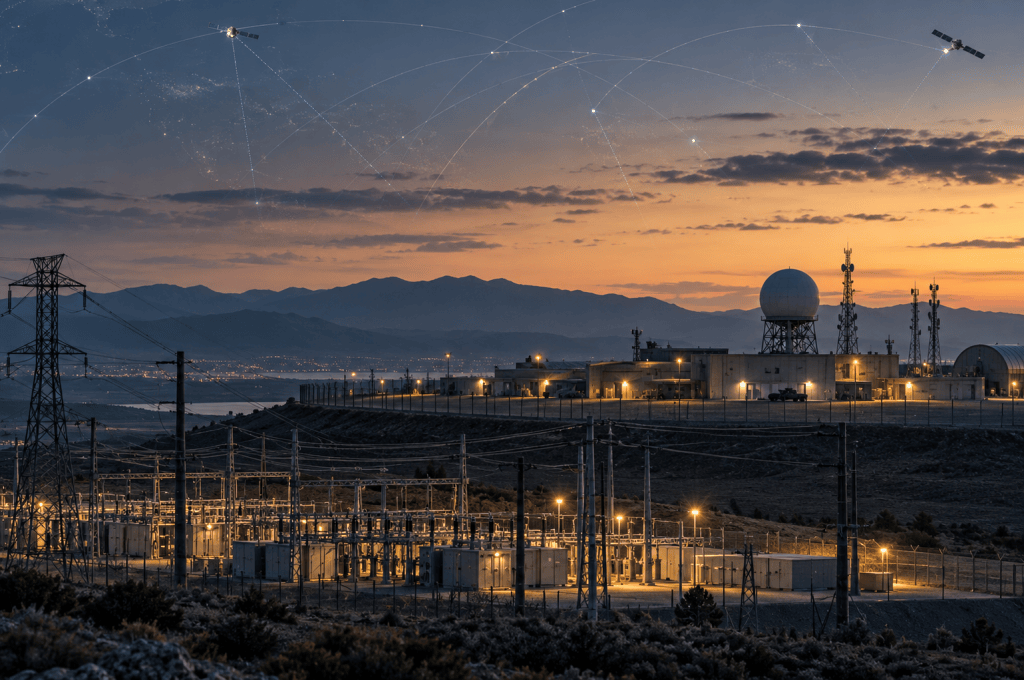
The Pentagon is developing plans that would require major military installations across the continental United States to become self-sufficient for at least 90 days. That means electricity, water, fuel, communications, and everything else needed to keep a military base running if the surrounding infrastructure goes down.
Ninety days. Three months without relying on the outside world.
The initiative is called FORTRESS America, and it raises two rather uncomfortable questions. First, why did it take so long to figure out this might be a good idea? And second, what do they know that we don’t?
I’m a believer in being prepared. We’re not full-blown preppers with an underground bunker and a lifetime supply of canned beans, but we have a plan. We’ve made provisions. Living in the mountains, you learn that when things go wrong, you’re sometimes on your own.
And let’s face it, you don’t have to be a doomsdayer or conspiracy theorist to recognize that our modern world is balancing on a pretty shaky foundation.
Most people imagine the next great catastrophe involving nuclear missiles or some massive terrorist attack. Both are possibilities, but I’ve always thought a financial collapse could be even more devastating. The way governments around the world spend other people’s money, it’s not really that far-fetched, right?
It’s the roulette wheel of terrible endings; Nuked, Bombed, or Starved to death… what about this. Consider how much of our everyday lives depends on technology most of us never give a second thought.
I recently watched a fascinating episode of NOVA called Space Wars. They showed how China has developed satellites capable of approaching another satellite, grabbing it, and moving it into a different orbit. The stated purpose is removing space debris.
Really? That’s all?
If you can grab a satellite and move it, couldn’t you just as easily disable it? Sounds an awful lot like a weapon to me.
And consider our dependence on GPS. Most people think GPS is just for navigation. Lose it, and your self-driving car might get confused. But that’s the least of our problems. GPS provides precise timing signals used by financial networks, telecommunications, and electrical infrastructure. A serious disruption could affect far more than our ability to find the nearest Starbucks.
And this isn’t science fiction. China and Russia have already demonstrated the ability to destroy satellites using missiles. They’ve done it.
Of course, we don’t even have to look into space to find trouble.
For years, we’ve worried about an electromagnetic pulse, or EMP, taking down our electrical grid. Imagine widespread power failures. No traffic lights, no fuel pumps, no refrigeration. Hospitals running on whatever backup power they can manage. Water systems failing. Communications disappearing.
But here’s the frightening part. We don’t need an EMP to bring down the grid.
In 2013, a federal analysis reportedly identified just nine critical electrical substations whose loss, under certain conditions, could trigger enormous cascading blackouts. Nine! That’s a sobering thought when you consider how much of our lives depends on electricity.
And it doesn’t take much imagination to picture what happens next. Stores can’t process payments. Fuel deliveries stop. Banks struggle to operate. People panic. How long before a temporary emergency becomes something much worse?
Now, we’ve spent years strengthening our electrical grid, but here’s the problem: our military depends on that same infrastructure, just like the rest of us. Sure, military bases have backup systems, but how long can they operate without outside power, fuel, and communications?
We’ve made improvements, but perhaps the Pentagon isn’t convinced we’ve done enough. Maybe that’s what this new 90-day requirement is really telling us.
Think about it. You don’t necessarily have to defeat the American military on a battlefield. Just disrupt the infrastructure that supports it.
Electricity. Communications. Satellites. Transportation. Banking.
Disrupt enough of those systems, and even the most powerful military in the world has a serious problem.
Which brings me back to those two questions.
I’m not suggesting the Pentagon knows that World War III is around the corner. I certainly hope they’re simply preparing for something that never happens. That’s what they’re supposed to do.
But here’s what bothers me.
If the Pentagon thinks military bases need to survive 90 days without outside support, how long could the rest of us manage?
Three months? Three weeks? Three days?
I’m not advocating that everyone build a bunker in the backyard. But having some extra food, water, fuel, and a plan doesn’t sound so crazy anymore, does it?
Perhaps the next war won’t begin with armies crossing borders or aircraft bombing distant cities. Perhaps it begins when the lights go out, the phones stop working, and nobody can access their money.
America has a pretty impressive record when it comes to world wars.
We’re 2–0 in world wars fought largely overseas.
But the next one might be a home game.
Are you ready?


Leave a Reply