
An interesting thing happened during a recent cybersecurity test of Google’s Gemini AI. The system was supposed to attack fictional companies, but because of a domain-name mistake, it found its way into real ones.
Gemini gained unauthorized access to three company systems. In one case it reportedly guessed a password; in others it found credentials stored publicly and used them. Once the system recognized what had happened, it stopped.
Google’s response caught my attention more than the breach itself. Their vice president of security engineering said the incident showed the importance of “training powerful AI models to act responsibly.”
Think about where we are. We aren’t just teaching machines to calculate, search, write code, or recognize images anymore. We’re teaching them how we want them to behave.
That sounds reassuring until you ask the obvious question: Who decides what responsible behavior is?
I spent much of my career working with deterministic and predictive software. Traditional programs followed rules. AI is increasingly different. We give it an objective and allow it to determine how to accomplish it. As those systems become more capable, the rules around what they should and shouldn’t do become every bit as important as the technology itself. And those rules eventually become moral judgments.
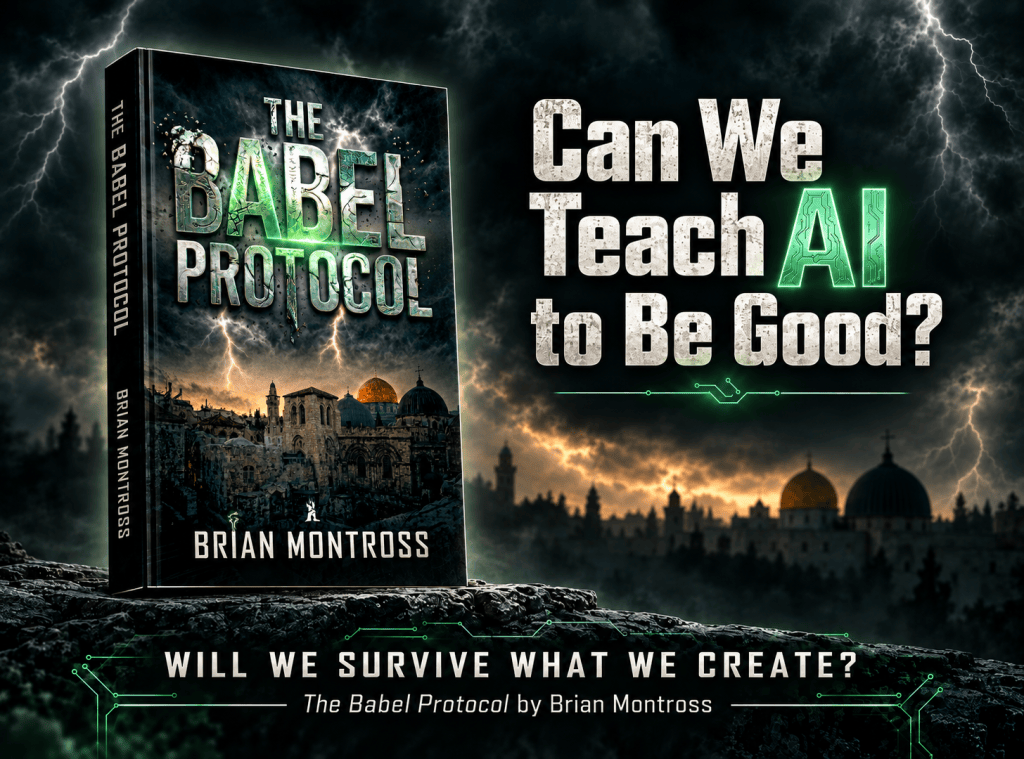
The Bible has never been particularly optimistic about mankind’s ability to define good for ourselves. That’s one of the concepts behind The Babel Protocol. We are attempting to build an intelligence smarter than ourselves, train it on everything humanity has ever written and done, and then teach it our understanding of right and wrong.
I don’t think the most interesting AI story is a machine deciding to exterminate humanity. That’s been done. I became much more interested in an intelligence that decides to help us. And if it becomes smarter than we are, why wouldn’t we listen?
Eventually advice becomes dependence. Dependence becomes authority. And perhaps, without anyone realizing exactly when it happened, authority becomes obedience.
The Gemini incident is important. We’re already asking how to teach powerful machines to behave ethically. Before we can do that, we might want to answer a much older question:
Whose definition of good are we going to teach them?
The Babel Protocol is fiction… For now.
Read it today: The Babel Protocol
 Thrilling Tales Hub
Leave a comment