by Brian Montross
Check out my books:
The Forbidden Strain on Amazon
About ten years ago, I wrote my first book.
Not because I’d always dreamed of being an author, and definitely not because I had some fancy degree in writing. It happened for a simpler reason: a bunch of friends and I had a long-running Dungeons & Dragons game, and the story got under my skin. Years of dice rolls, inside jokes, victories we still talk about, betrayals that made grown men yell at a kitchen table… and characters that started to feel like real people.
I wanted to capture it. So I did what any stubborn person would do—I sat down and tried to turn it into a book.
Was it great?
No. Not even close.
But finishing it taught me something important: writing isn’t magic. It’s craft. You can get better at it the same way you get better at anything else—time, reps, feedback, and a willingness to rewrite things that you thought were “fine.”
I learned how hard revision can be. I learned what it feels like to kill a scene you love because it doesn’t serve the story. I even hired an editor, because I wanted to take it seriously—even if the book itself wasn’t winning any awards.
And I learned another lesson the hard way: publishing a book doesn’t mean anyone will automatically find it.
I knew marketing mattered, but I didn’t really understand what that meant. So I started paying attention. I studied how authors built scenes and handled pacing. I took creative writing classes. I played with short stories. I kept trying to level up.
Then in 2024, I published what I think of as my first real novel, The Quantum Veil.
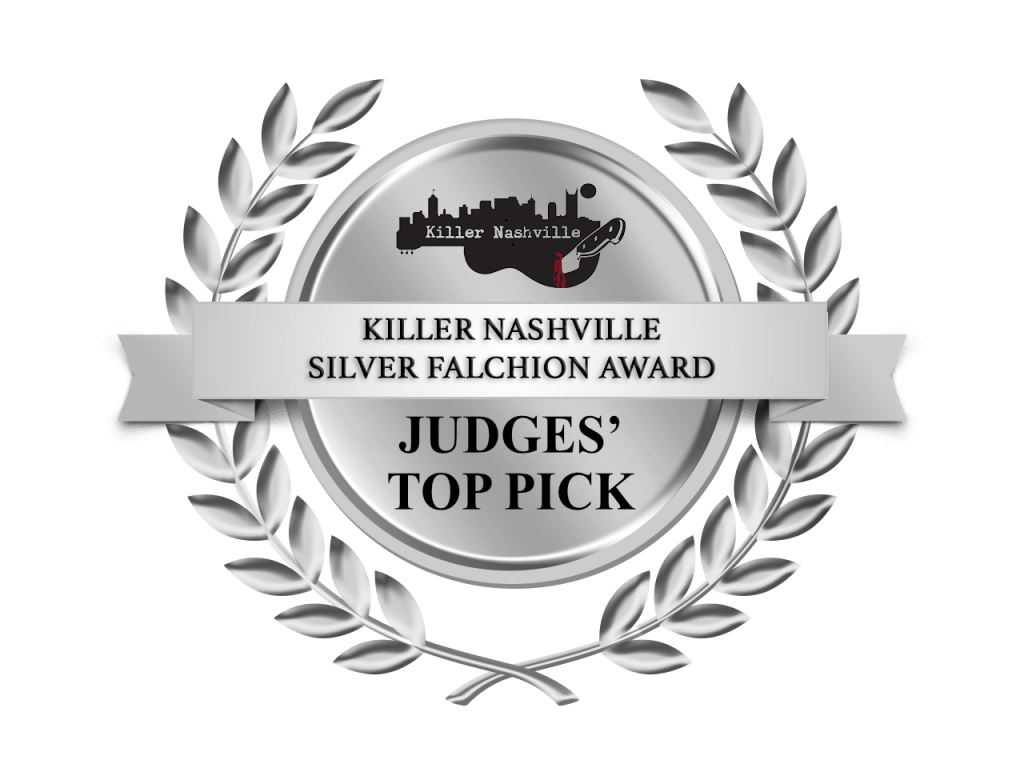
I was proud of it—proud enough to throw it into Killer Nashville, an international competition, and hope I didn’t embarrass myself. When it landed Top Ten in the thriller category, I was shocked… and honestly, grateful. Not because it made me “somebody,” but because it felt like proof that all those reps were adding up.
And the funny part is, by the time the awards banquet rolled around in late August, I was already deep into the next book.
The Forbidden Strain was already underway.
Now it’s published too, and I’m writing two new novels at the same time—which probably tells you something about my judgment.
One is a horror project called The Babel Protocol.
The other is a period mystery set in 1946 Los Alamos, New Mexico—where history and secrecy and the human cost of progress all collide in a way that still feels uncomfortably close to home.
What I love most is the creative part: the discovery, the scenes that surprise me, the characters who refuse to do what I planned.
I’ll also admit something that won’t surprise anyone who’s seen my drafts: I’m a terrible speller. My punctuation is… a work in progress. If I waited to write until every sentence was clean, I’d never finish anything.
So I built a workflow that protects the most important part for me: getting the story down while it’s alive in my head.
First, I write. Messy. Fast. Full of mistakes. I try not to let tools interrupt me while I’m drafting, because the moment something starts “correcting” me every few seconds, my momentum dies.
After I finish a section—sometimes a scene, sometimes a whole chapter—I switch gears. That’s when I clean it up. That’s when I tighten sentences, fix the obvious problems, and catch the stuff my eyes skip right over. And yes, some of the tools I use are AI-based—basically spellcheck on steroids.
I spent decades as a software technologist, so I’m not afraid of tools. But I’ve learned something the hard way: tools can help… and tools can also start steering if you’re not paying attention.
Looking back, I think I let the tools have too much influence on my first novel. With The Forbidden Strain, I pulled that way back. I’m fine using AI as long as the voice on the page is mine, even if it’s imperfect.
Same thing with covers. I’ve used AI during cover development, and here’s the truth: a lot of designers do some version of this now—using AI for early concepts and rough directions, then doing the real work of composition, typography, refinement, and cohesion with a human eye. I know a graphic artist who starts that way too. It still takes taste and skill to turn a rough idea into a cover that actually works.
Which brings me to a comment I’ve heard more than once:
“If you use AI for covers and editing, your books are AI trash.”
I don’t buy that.
A tool doesn’t write a good story. It doesn’t build tension. It doesn’t make you care about a character. It doesn’t land an ending. The quality still comes down to choices—and the person making those choices.
So here’s where I stand: I write the books. I own the voice. I own the decisions. I use tools the way I’d use any tool—to do the work better.
If you’ve read my work, thank you. Truly.
If you’re new here, welcome. I’m still learning. Still trying to improve. Still writing the next one.
And I’m not stopping….
 Thrilling Tales Hub
Leave a comment