
by Brian Montross
Why do humans live, at best, about 120 years?
The world’s oldest verified person was Jeanne Calment of France, who died in 1997 at the astonishing age of 122 years and 164 days. Today, the oldest living person is Ethel Caterham, who turned 116 this year. Despite advances in medicine, no one has ever exceeded Calment’s record. It seems our biology has a ceiling.
Yet our average lifespan has changed dramatically. A hundred years ago, in the early 1900s, the global life expectancy was about 30–40 years, shortened largely by disease, war, and lack of modern medicine. By 1950, it climbed to about 48 years. Today, the global average is around 73. In wealthier nations, many live into their 80s, with centenarians no longer rare. But even with these gains, no one escapes the hard stop: 120.
Why that number? The Bible offers an ancient answer. Before the flood of Noah, in Genesis 6:3, God declared: “My Spirit shall not abide in man forever, for he is flesh: his days shall be 120 years.” In those days, men lived for centuries — Adam for 930 years, Methuselah for 969. But God set a new boundary. Punishment? or Protection…. By limiting human life, He limited the ability of any one man, dynasty, or tyrant to hold unchecked power for too long. Mortality humbles us, reminding us that time belongs to Him.
But what if science could undo that boundary?
AI and DNA technologies are now being used to probe the limits of aging. Modern gene editing can cut and rewrite DNA like code. Researchers are exploring telomere extension — the “caps” at the ends of chromosomes that shorten as we age. Some studies look at reprogramming cells to restore them to a younger state. Add AI into the mix, and the pace accelerates: algorithms crunching billions of molecular possibilities, designing therapies we could never imagine on our own.
The dream? A lifespan of 150… 200… maybe more. Some futurists whisper about lifespans stretching toward 1,000 years — a return to the ages of Noah’s world.
But speculation quickly turns dark. Who would get it first? The wealthy and powerful. Imagine political dynasties that never die, corporations with leaders who outwait entire nations, or elites who use longevity as currency — rationing it, trading it, weaponizing it. What if immortality is possible, but only for a select few?
That’s not just science fiction. That’s the shadow at the edge of today’s headlines.
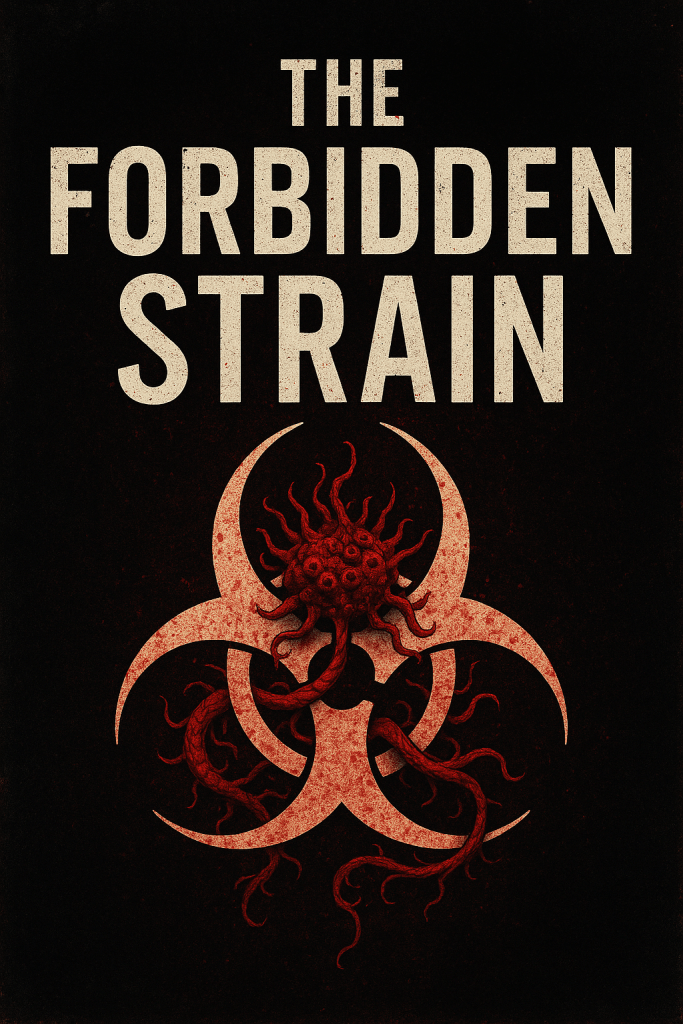
And it’s the core of my novel The Forbidden Strain. In the high desert of New Mexico, beneath the mesas, a hidden lab manipulates ancient DNA under the cover of sustainability research. On the surface, they promise green technology. Underground, they pursue something forbidden: a serum that defies the 120-year boundary, tested not on volunteers, but on children.
Detectives and agents uncover what happens when man dares to cross the line God Himself set after Noah. And the question they face is the same one before us today: what price will man pay to live forever?
Read more and subscribe here: The Forbidden Strain
 Thrilling Tales Hub
Leave a comment